Some time ago, I built a box to track ADS-B data in my location. Since then, I’ve added more Pi’s and SDRs and had been planning an upgrade for some time, but my hand was forced after some hardware failures we’ll get into.
The New Box
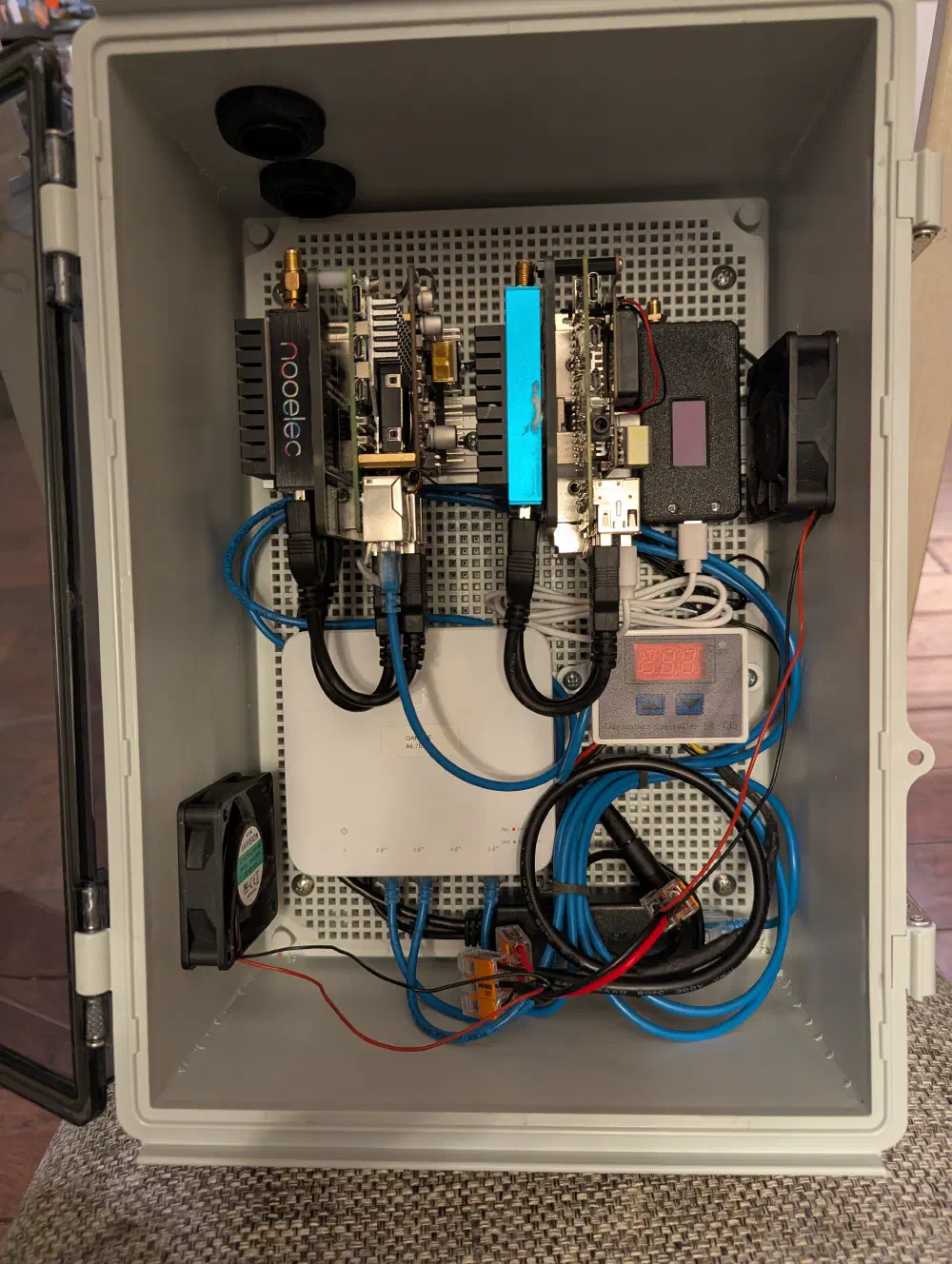
Here it is before mounting and without the mess of antenna cables:
/images/2026.05-ADSB2.jpg
And here is is in its final home:
/images/2026.05-ADSB1.jpg
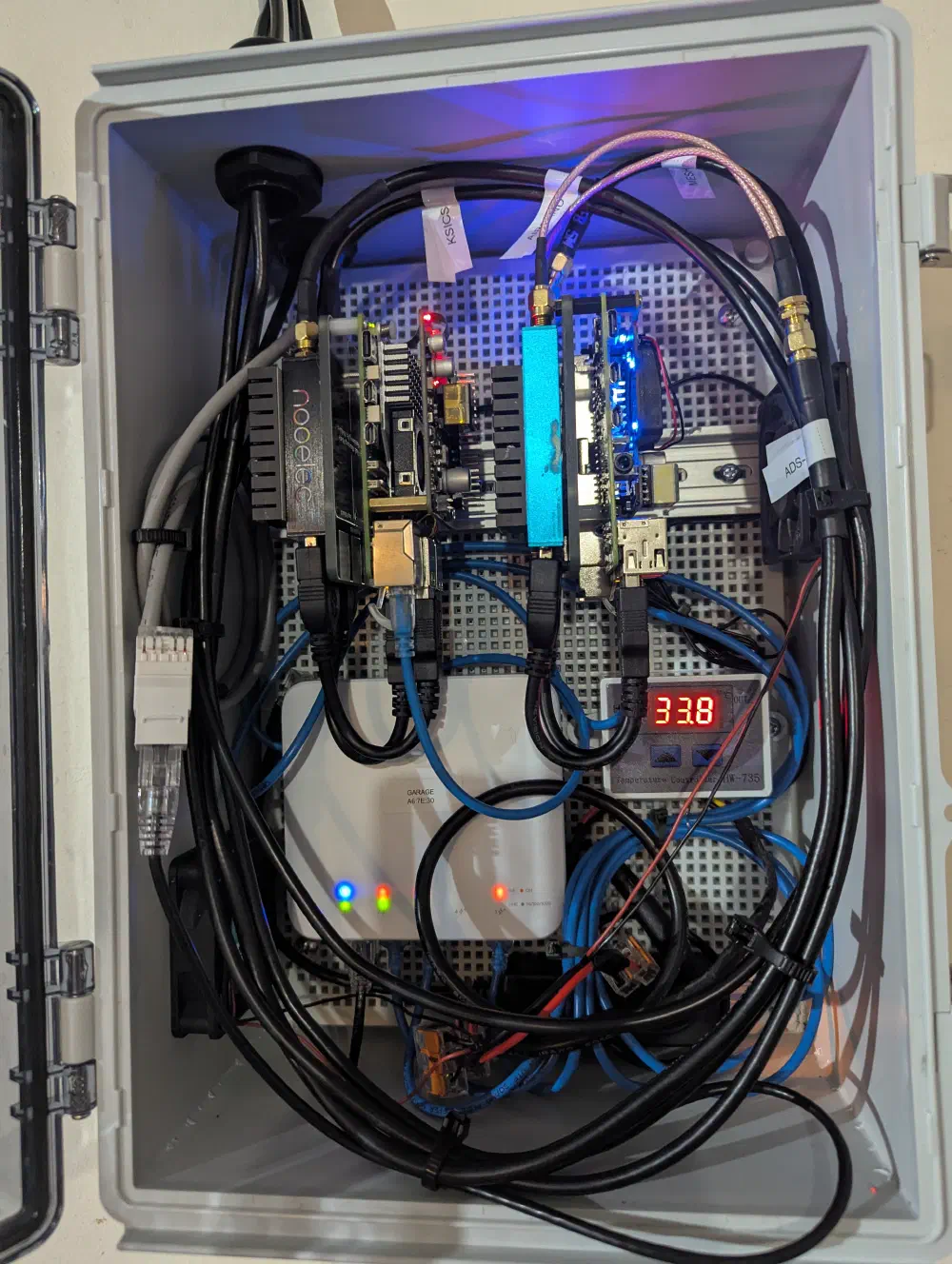
The format is generally the same as before, but there are a few key changes.
Box Size
One of my regrets is I chose a box that was just large enough before. As things got added, it became too cramped to work in and properly mount equipment. At one point, the Pis had maybe 3mm of space between them. I upgraded to a significantly larger box for this new build, and hopefully I have space for more SDRs other gear.
Meshtastic and Trunk Recorder
I’ve since added another SDR running Trunk recorder and a Meshtastic base station in the enclosure, you’ll note the second Pi sandwich and the small box in the new photo. The Meshtastic node I think also was a victim of the hardware failure below, so it got yanked pending replacement.
PoE
I no longer use the external PoE splitters that deliver a USB-C connection to power to Pi. I believe these contributed to the hardware failure we’ll get into, so I opted for more standard PoE hats for both. Everything is still PoE powered, and I still use the splitter on the thermostat and fans.
Network
I also opted for a Unifi Flex switch rather than the no-name PoE switch from before. I was brushing into the limits of PoE+, so upgrading to PoE++ would give me more headroom for expansion in the future. Also having port-level monitoring (especially for power consumption) is a nice bonus as I can reboot specific ports without affecting others.
Cooling
One issue I noticed when servicing the old box was it was full of gnats. I planned on keeping larger insects out, but between running out of space for cable entry and doing some creative improvising and the poor fit of the old fan covers, there were enough small openings they could make their way in. I replaced the vent openings with a tighter fitting cover and dust filter that should keep them out.
The Hardware Failure That Spurred All This
I had been scheming on upgrades for a while, and even bought the Flex switch during a recent trip to Micro Center to start planning things. I was planning for all of this to be done later this year, but I had a series of related hardware failures that forced my hand into doing all this sooner.
After moving some cables in my rack, I noticed the Trunk Recorder Pi wasn’t coming back online. I tried a few reboots, but eventually pulled it out and powered it up on my desk. It had no video output and a solid Red and Green LED, which on the Pi 4 means bootloader trouble.
While installing the new Pi and cleaning up cables, I noticed the other Pi also started to show the same symptoms. This is what caused me to pull everything down and re-evaluate since the Pi 5 was also not behaving well. I figured out I had several bespoke issues all related to power delivery.
The Supplies Were Dead
Both of the old Pis refused to boot with a solid Red and Green light, which means the Pi never gets into its bootloader. Digging into one, I found that it had 5 volts on its 3.3 volt rail, which is a sign the Power Management IC (PMIC) chip was damaged. The consensus online seems to be this can happen when there’s an upstream problem with the power supply and the PMIC chip is damaged.
Searching for those power adapters, I found some forum posts talking about how they’re fine for years then they were also frying Pis for others. My hunch here is that the power supply uses some switching supply to take the ~50 volts of PoE supply and coverts it to 5 volts for the USB-C connector. I suspect if the mosfet that is doing that switching hiccups for a second (for example during it’s initial power up), it’s possible there’s a brief spike of higher voltage getting sent to the USB-C connector and damaging the PMIC chip.
The PoE hats use a transformer to do this conversion, so hopefully they will be a bit more reliable. Folks in forums online seem to have much better luck long-term with those, or at least I found less folks complaining about them.
The Supplies Were Undersized
The splitters I ran were just plain PoE, so they only had a bit of power for external devices on the Pis. I didn’t realize how close I was to this limit until I switch to the Pi 5 which keeps better tabs on the USB power budget and started disconnecting SDRs for current load. The new power supplies are PoE+ which offer quite a bit more power for the SDRs and external USB devices.
Meshtastic Node Issues
I did have issues with my Meshtastic node towards the end (you’ll notice it got yanked shortly after installation because it was not working), and I now think this is related to the power issues above. The Heltec board was in a constant reboot loop at one point and now doesn’t seem to have a functional radio, so I suspect it may have either been damaged with a voltage spike, or voltage sag with the tight power budget I may have been exceeding before.
The plan is to replace the Heltec board with a RAK Wisblock and perhaps even make it PoE powered as well rather than using USB from the nearby Pi.
Wrapping Up
I’m not 100% sure the power supplies I’m pointing fingers at are the real issue here, only time will tell.
That being said, the setup has been quite stable (except a few broken wires or me creating my own problems) for several years and the ADS-B and P25 scanner have both recorded a number of interesting things and been data sources used in new reporting and the like.
Hopefully, the upgraded setup will last for some time. The enclosure is the only “good” piece of gear getting replaced outright, and it will have a home shortly holding a switch and fiber converter to extend my network into an outdoor shed for improved WiFi coverage.